Why association event tech simplification starts with standards


At 9:00 AM, an association event director opens three versions of the same member record: one in the registration system, one in the event app, and one in the association management system. The email fields do not match, and the job titles do not match. Cutting a vendor will not resolve those conflicting fields or fix the subsequent reporting handoff. The event tech stack gets easier to run only when each system has clear data ownership and every event uses the same registration workflow.
Real simplification starts with portfolio standards, not vendor math. Association event teams need a single registration template, a single field map, and a shared reporting process across events. Specialist tools stay only when they earn their integration and governance cost.
Key takeaways:
- Standardize workflows and data before reducing vendor count
- Connect the association management system (AMS), registration, engagement, and reporting through one data model
- Assign every tool a keep, integrate, replace, or retire decision
- Protect live events through phased migration and controlled exceptions
- Measure handoffs, duplicate records, reporting time, adoption, and exhibitor ROI
Why cutting vendors never fixes the reporting problem
Most association event directors have already tried the obvious fix: remove a tool. The reconciliation work stays. Disconnected workflows repeat the same manual repair with every event because the shared ownership that would prevent those handoffs was never defined. When registration, engagement, meetings, and lead data live in separate places without a common identity, association leaders receive reports that show activity rather than proof of member value or exhibitor ROI. The labor between the systems is where the cost hides, and that labor never appears on any invoice.
Disconnected data weakens ROI proof
Disconnected event data weakens ROI proof because no single system captures the full attendee journey in one record. A director opens the post-event reporting folder after an association annual meeting and finds registration in one export, meeting activity in another, and lead retrieval data arriving from exhibitors on different schedules. The first reporting cycle disappears into matching email addresses instead of analyzing behavior, and the renewal deck slips by a week.
That gap carries a commercial cost. A sponsor can see booth scans, yet cannot see whether those contacts viewed sessions, booked meetings, or matched the intended audience. Each system records only one slice of the attendee journey, leaving the renewal conversation based on partial evidence. If registration data and lead data cannot be joined to the same person, you are estimating exhibitor ROI rather than proving it.
Vendor count misses the cost
License count is an incomplete measure of complexity. A portfolio with four tools and 12 manual handoffs can demand more work than one with six tools connected through clear data ownership and application programming interface (API) integrations. Fewer contracts do not remove duplicate profiles, conflicting field names, or delayed reports.
Consider what happens in practice. Two systems store the same attendee under different company spellings, so an exhibitor lead export lists one buyer twice, and the sponsor report undercounts a session. A registration coordinator then spends two afternoons reconciling those records before finance signs off. That reconciliation work does not appear on any invoice, which is exactly why cutting a license rarely lightens the load. The highest cost in a fragmented stack is the labor between the tools, and that is the cost a portfolio review should measure first.
Portfolio standards define real simplicity
Real simplicity comes from shared standards, not fewer logos. Central teams define the data, permissions, templates, and reports that cannot vary. Chapters and event teams then adapt content and execution without building a separate way of working for every conference. The standard is the thing that scales, because it turns repeated setup into reused setup.
Standardize repeatable workflows
Start with the work that repeats across flagship conferences, regional meetings, and chapter programs. Registration setup, attendee groups, permissions, and reporting usually follow the same underlying pattern, even when event size changes. Standardizing those elements gives teams a tested starting point instead of another blank configuration.
A useful standard includes five portfolio assets:
- Registration template with required fields and approved conditional paths
- Permission matrix showing which central and local roles can edit each area
- Shared taxonomy for attendee types, sessions, exhibitors, and sponsors
- Reporting pack with the same portfolio measures across every event
- Exception log showing where an event differs and who approved the change
Templates do require upfront work, and that cost is real. Building the first registration template and permission matrix can take a week of a coordinator's time. The payoff arrives at the second event, when the team reuses a working structure and cross-event analytics keep comparable definitions. If your portfolio runs only a small number of comparable events each year, heavy template work may not repay the setup cost, and a lighter shared checklist is the better call
Govern centrally and execute locally
Who should own what? Central governance should cover any changes to identity, access, revenue, or portfolio reporting. Local control should cover content, timing, branding, and other choices that do not alter shared data. That division gives chapter teams room to run their events without weakening member data governance.
Chapter autonomy has value. A regional conference that faces different tax rules or program structures can use its own pricing structure and registration questions while still mapping attendee types, member IDs, and session categories to the shared taxonomy. The central owner approves the exception. The local lead owns the execution. That is governed flexibility, not a separate operating model.
The stricter rule permits exceptions only when the local requirement is documented, assigned to an owner, and tested against shared reporting.
A clear governance model names four owners: the portfolio platform owner, the AMS data owner, the integration owner, and the local event lead. Without named accountability, configuration decisions drift back into inboxes and meeting notes, and the standard erodes one exception at a time.
One data model connects every event
A connected data model protects the member record from registration through engagement and reporting. The AMS remains the source for defined membership fields, while event systems attach ticket, session, meeting, and lead activity to the same identity. Clear ownership stops point-to-point synchronization from spawning several versions of the same member.
Build one member record
Point-to-point synchronization often begins as a practical shortcut. The registration tool sends data to the mobile app, the app sends selected fields to the customer relationship management (CRM) system, and another export returns to the AMS. Each connection works alone. Together, they leave the portfolio unsure which record is current.
Test the architecture with four questions:
- Can the team trace one member from registration through session attendance and meetings
- Does one identifier follow that person across every event
- Can a field change without creating a duplicate profile
- Can reporting compare the same behavior across chapters and flagship events
Any "no" here is a data-model problem, not a dashboard problem. In practice, an unmatched registrant might be a member who registered using a work email that differs from the AMS record. That registrant enters the review queue, a central owner matches the record against the member ID, and the event platform updates the profile before recommendations and access rules apply. Adding another reporting layer on top of a broken identity structure only produces prettier versions of the same duplicates. Fix the identity first.
Define AMS data ownership
The association management system should own stable member attributes, including member ID, status, organization, and approved profile details. The event platform should own event-specific behavior, including ticket selection, check-in, session activity, meetings, and exhibitor interactions. The update direction must be explicit for every shared field.
A practical field map can look like this
Identity matching also needs one approved rule. Email alone is risky when members change organizations or register through an assistant. Use the member ID as the primary key where available, then define how unmatched registrants enter a review queue. If a meaningful share of registrants falls into that queue, the matching rule likely needs a second key before the next event.
Fix registration data upstream
Registration data quality decides downstream segmentation and matchmaking quality. A missing job role weakens the hosted buyer qualification. An inconsistent company name creates duplicate organizations and broken permissions. The problem starts in the form, even though it surfaces later in engagement reports.
Collect only fields tied to an approved use. If a field controls access, pricing, matchmaking, or reporting, validate it during registration. If no team uses the field within the next event cycle, remove it or collect it later through progressive profiling.
Clean registration data also provides better inputs for artificial intelligence (AI) and rule-based matching. Behavior can improve recommendations over time, yet it cannot fully correct sparse profiles or conflicting identities. Data quality stays an operating responsibility, not a feature setting.
Every tool must earn its place
Every tool in the event tech stack needs a portfolio-level decision based on capability, data ownership, handoffs, and reporting value. The goal is to keep only the tools that preserve the shared operating standard and add more value than they cost to govern.
Inventory capabilities across events
Audit workflows before products. List what the flagship annual meeting, regional conferences, education programs, and chapter events must accomplish, then map every system against those capabilities. Product-by-product inventories often hide duplicate functions because each owner describes the same work in different words.
A structured event tech RFP builder can support the inventory, and it pairs well with a portfolio consolidation audit. The audit still needs operational evidence: record who enters data, where it moves, which team corrects it, and how long reporting takes.
Capture at least these workflow areas:
- Registration and ticketing
- Member verification and pricing
- Session and speaker management
- Attendee engagement and matchmaking
- Exhibitor operations and lead capture
- Onsite check-in and access
- Analytics and sponsor reporting
Score every tool consistently
Assign each tool one of four decisions: keep, integrate, replace, or retire. Apply the same criteria across events so internal preference does not outweigh portfolio cost. A specialist system can stay, though its unique capability must exceed the work required to connect, secure, support, and report on it.
Score member-data ownership, manual handoffs, cross-event reporting, local adoption, and unique capability. When two tools perform the same task, keep the one that preserves the member record and reduces reconciliation. Price matters, yet license savings alone should not decide the outcome. A cheaper tool that adds three manual handoffs per event is the more expensive choice once you count the labor.
Choose the core and integrations
Outcome-led stack design starts with auditing tools, mapping data flow, choosing a core platform, and prioritizing integrations. The core should hold the workflows that generate the largest volume of shared data, not the longest feature list. For most association portfolios, those workflows are registration, engagement, meetings, and reporting.
Rank integrations by operational and reporting impact. First, protect member identity between the AMS and registration. Next, connect engagement and lead activity to reporting. Add specialist integrations only after field ownership, error handling, and support responsibility are documented. Teams comparing that architecture with a connected event platform can see how Swapcard works across registration, integrations, and portfolio reporting.
To place the AMS connection at the center of that map, the iMIS integration shows how member data can flow into event operations without turning the AMS into the event platform.
Connected portfolios produce measurable gains
Connected portfolios produce measurable gains when standard workflows cut reconciliation and improve data quality across events. Evidence from named customers shows the link between integrated data and operational performance. The value comes from repeatable execution, not from consolidation as an isolated procurement exercise.
Informa Tech cut manual work
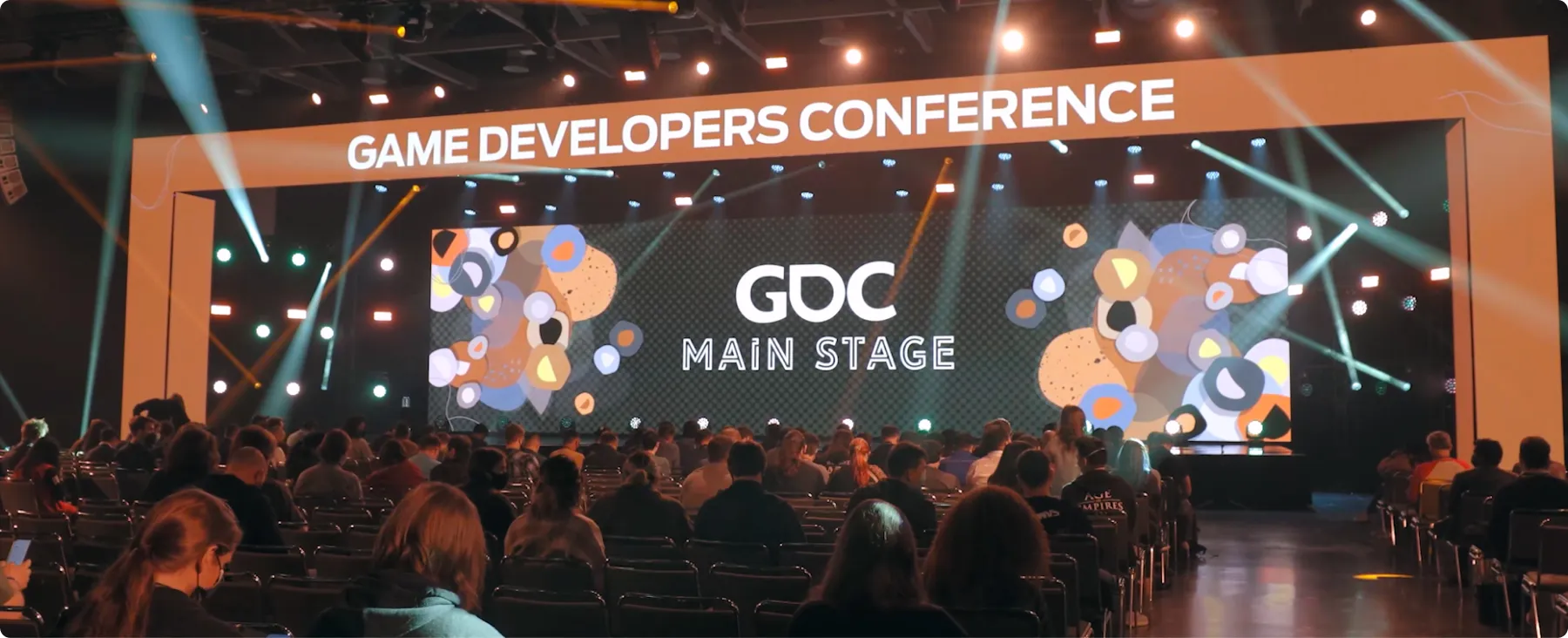
Integrated event data saved Informa Tech two weeks of manual work per event. The Informa Tech case study shows how consolidating data from across business units into a single reporting flow reduced manual data collection and gave organizers a clearer view of the attendee journey.
Patrick Shields, Director of Customer Success at Informa Tech, summarized the operational value directly: "Swapcard helped us with the integration of data across our different business units...has helped my team save 2 weeks of work per event."
Those two weeks change what the event team does after the conference. Instead of reconciling files, organizers review session behavior, meeting activity, and exhibitor outcomes while the information is still relevant to renewal planning. Time saved on reconciliation becomes time spent on the renewal case.
Terrapinn scaled portfolio performance
Terrapinn demonstrates how consistent execution and data integrity go hand in hand across its portfolio. The team needed to fix inconsistent execution, duplicate records, API problems, and uneven internal adoption across a large global program, and the results spoke for themselves after consolidating its event technology and standardizing engagement practices:
- 2x app adoption and engagement
- 42% more networking between users
- +32 Net Promoter Score (NPS) across 70 events
- ~420,000 total attendees across those events
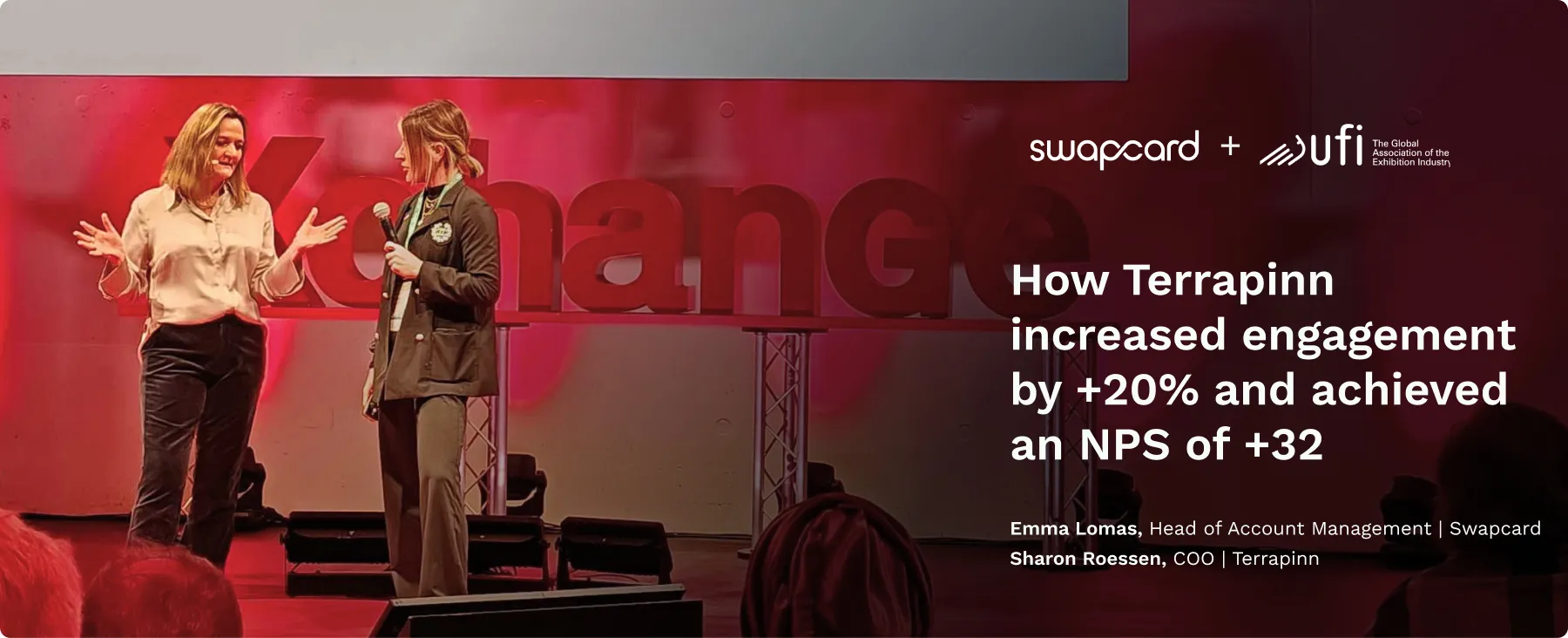
The Terrapinn case study makes the point that standardization is more than an operations project. A consistent setup improved the attendee experience while providing teams with comparable data across events. Portfolio governance created the base for local execution rather than limiting it. COO Sharon Roessen noted that one event saw a 42% year-over-year increase in the number of meetings organized through the app, which is the kind of comparable, event-over-event number a fragmented stack cannot produce.
Phased migration protects live events
Phased migration reduces operational risk by moving event cohorts in a controlled order rather than replacing the whole stack at once. Each cohort validates data mappings, templates, permissions, and reports before the next group moves. Live events stay protected while the portfolio builds evidence that the new operating standard holds.
Sequence migration around live events
Start with a representative event that has manageable complexity and a team willing to document the process. Avoid a pilot so small that it never tests member pricing, exhibitor workflows, or integrations. Avoid the flagship annual meeting as the first cutover unless contractual timing leaves no alternative.
Run migration in four stages
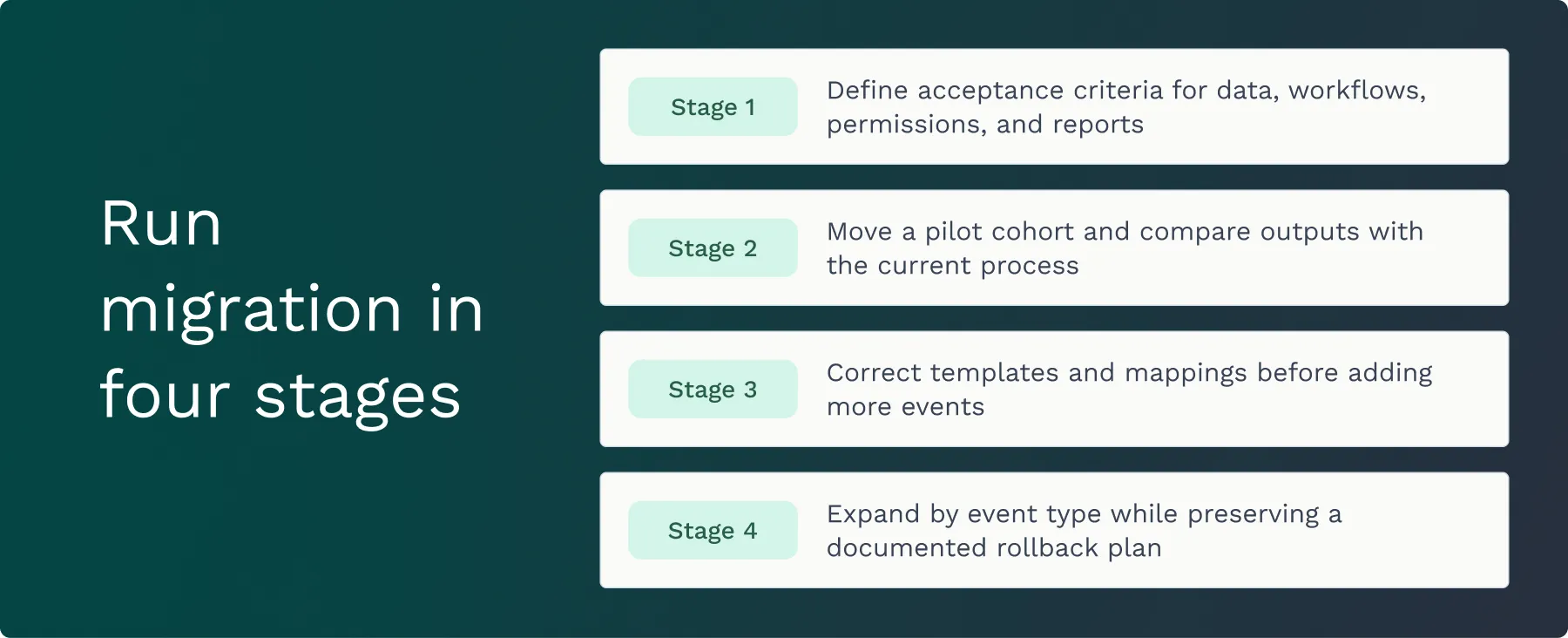
A simultaneous replacement can shorten the period of dual operation, which is a real advantage. It also concentrates data, training, and onsite risk into a single deadline. For association portfolios with active registrations, favor staged migration unless every workflow has already passed testing.
Make ownership explicit
Migration needs a central owner with authority to approve templates and exceptions. Each event also needs a local lead accountable for adoption, testing, and escalation. Shared ownership without decision rights usually routes urgent issues back to a committee, where they stall.
Document responsibilities before configuration begins:
- Portfolio owner approves standards and migration sequence
- AMS owner approves member fields and synchronization direction
- Integration owner monitors API and webhook behavior
- Local event lead tests workflows and manages approved exceptions
- Reporting owner validates cross-event measures
Local permissions should match those responsibilities. Event teams can update content and schedules, while central owners keep control over shared fields, access rules, and portfolio reports.
Measure portfolio outcomes
Measure simplification against the work removed, and the evidence gained. License cost belongs in the baseline, though it should sit beside duplicate records, manual handoffs, reporting time, adoption, and exhibitor ROI. The event engagement benchmarks provide organizers with a reference point for adoption and engagement metrics.
Baseline these five numbers before migration, then re-measure after two event cycles: duplicate records per event, manual handoffs per event, days to deliver the sponsor report, app adoption rate, and exhibitor leads per exhibitor. A connected platform supports that model in specific ways. Registration validates fields at the source, so segmentation and matchmaking start from a clean slate. Developer API and Webhooks move member data between the AMS and CRM under defined ownership. Analytics and reporting integrate registration, check-in, sessions, meetings, and exhibitor leads into a single event record.
Swapcard does not replace an AMS, CRM, marketing automation system, or project management tool. Its role is to connect event operations and engagement while preserving clear system ownership. Association portfolio owners can get started with Swapcard by mapping a single event cohort, its member fields, and the required reports.
A simpler stack is one where every tool has a defined role, every member record has an owner, and every event produces comparable evidence. That comparability is what makes sponsor renewal conversations defensible and board-level budget requests credible.
FAQs
How do I decide which specialist tool to keep versus retire in my event tech stack?
Score every tool against the same four criteria across your portfolio so internal preference does not outweigh cost. Look at member-data ownership, manual handoffs per event, cross-event reporting value, and unique capability. Keep a tool when it fits your standard and does not create material handoffs. Retire it when the capability is duplicated, unused, or disconnected from reporting. A specialist tool earns its place only when its distinct value exceeds the work to connect, secure, support, and report on it. When two tools do the same job, keep the one that preserves your member record and reduces reconciliation. A cheaper tool that adds three manual handoffs per event is typically the more expensive choice once you count the labor.
What if my association management system and event platform store different versions of the same member?
Start by defining clear data ownership rather than adding another sync. The AMS should own stable member attributes like member ID, status, and organization, while the event platform owns event behavior like tickets, sessions, meetings, and lead activity. Make the update direction explicit for every shared field. Then set one identity-matching rule. Email alone is risky when members change organizations or register through an assistant, so use the member ID as the primary key where available and route unmatched registrants into a review queue. If a meaningful share lands in that queue, your matching rule needs a second key. Swapcard's Developer API and Webhooks can move member data between the AMS and CRM under defined ownership, which helps keep one record instead of several.
When should I choose a phased migration over replacing my whole event tech stack at once?
Favor phased migration when you have active registrations and live events to protect. Move one representative event cohort first, compare its outputs against your current process, then correct templates and mappings before expanding by event type. Keep a documented rollback plan at each stage. A simultaneous replacement can shorten the period of dual operation, which is a real advantage, but it concentrates data, training, and onsite risk into a single deadline. Avoid a pilot so small it never tests member pricing, exhibitor workflows, or integrations, and avoid your flagship annual meeting as the first cutover unless contractual timing leaves no choice. Staged migration typically gives you evidence that the new standard holds before more events depend on it.
How do I fix registration data quality so it does not break matchmaking later?
Fix it at the source, because registration data quality decides downstream segmentation and matchmaking. Collect only fields tied to an approved use. If a field controls access, pricing, matchmaking, or reporting, validate it during registration. If no team uses it within the next event cycle, remove it or collect it later through progressive profiling. Standardize company names and attendee types to avoid duplicate organizations and broken permissions. Swapcard's Registration supports conditional logic so each attendee type sees only relevant questions, which keeps forms shorter and cleaner. Keep in mind that AI and rule-based matching improve recommendations over time but cannot fully correct sparse profiles or conflicting identities, so treat data quality as an ongoing operating responsibility, not a one-time setting.
Can I let chapter teams customize their events without breaking portfolio reporting?
Yes, through governed exceptions rather than separate operating models. Central governance should cover anything that changes identity, access, revenue, or portfolio reporting. Local control should cover content, timing, branding, and other choices that do not alter shared data. Permit an exception only when the local requirement is documented, assigned to an owner, and tested against your shared reporting. Name four owners so accountability does not drift: the portfolio platform owner, the AMS data owner, the integration owner, and the local event lead. Swapcard's Groups, Permissions, and Guest Mode help separate central and local roles, so event teams can update content and schedules while central owners keep control over shared fields, access rules, and portfolio reports.
What measures should I baseline to prove my stack is actually getting simpler?
Measure the work removed and the evidence gained, not just license count. Baseline five numbers before migration, then re-measure after two event cycles: duplicate records per event, manual handoffs per event, days to deliver the sponsor report, app adoption rate, and exhibitor leads per exhibitor. License cost belongs in the baseline, but it should sit beside those operational measures. Swapcard's Analytics and Reporting can join registration, check-in, sessions, meetings, and exhibitor leads within one event record, which makes cross-event comparisons possible. A simpler stack typically shows fewer handoffs, faster reporting, and stronger ROI proof over time, even if the vendor count barely changes.

Bhavya Sharma
Senior Content Marketing Manager
Bhavya leads content strategy across the funnel at Swapcard, pairing flagship research with storytelling that turns awareness into pipeline.


Join 12,000 subscribers and unlock industry secrets.
By submitting this form, you agree to receive periodic emails on insightful content related to events and our product, and in accordance with our Privacy Policy. You can, of course, change your preferences or unsubscribe at any time.