How Asprey Group Generated $35K in First-Year Marketplace Revenue


Overview
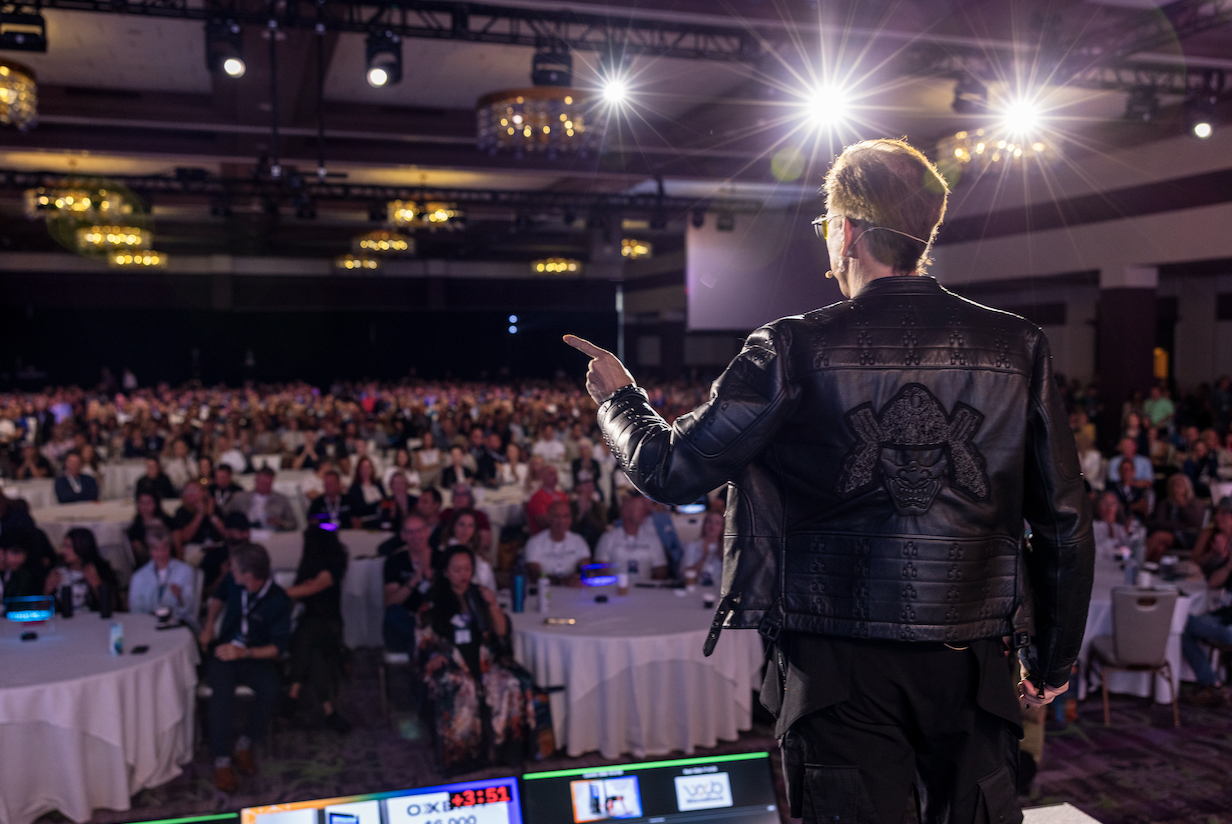
The Asprey Group produces the annual 2026 BEYOND Biohacking Conference, an event built around helping attendees take control of their own biology and quality of life, drawing over 4,000 attendees and 150 exhibitors. Over more than a decade, the conference has grown a loyal, returning community, one where, as their team puts it, older people feel younger and younger people feel empowered.
This year, working with their event platform partner Swapcard, The Asprey Group added Exhibitor Marketplace to their event app: an integrated digital storefront where organizers can package, market, and sell lead capture, visibility, and sponsorship add-ons directly to exhibitors. It runs inside the same app attendees and exhibitors already use to register, network, and connect, so there was nothing separate to log into or learn.
The result: $35,000 in total revenue across the marketplace ecosystem, including exhibitor spend. Exhibitors purchased Marketplace packages at a 45% rate and activated lead capture at 70%, with roughly 150 exhibitors participating. Attendee engagement during the conference also outperformed organizer expectations, with 65% active users.
This guide walks through how The Asprey Group's team got there, from identifying the opportunity to building packages, setting up the platform, and promoting it to exhibitors, so other organizers can follow the same path.
The Goals
The Asprey Group had never sold add-ons or digital products on any platform in previous years. There was no established process for packaging exhibitor offerings, and building post-conference offers meant manually rebuilding pages on a separate WordPress site each time.
"We hadn't had this option for making revenue yet. We invested in the platform, and then that was sort of it," says Kristalrose, Registration & Experience Manager at Asprey Group. "This year, the app basically paid for itself, with just a 45% adoption rate."
There was also early hesitation about complexity. The team worried that exhibitors, used to filling out a simple order form for lead retrieval, would be put off by the extra steps of registering on Swapcard and adding team members. With the strategy set, here's how it came together in practice.
The Solution
The Asprey Group's team worked closely with Swapcard to build a strategy for exhibitor sponsorship and service packages from scratch, configure the platform, and roll it out to exhibitors in time for the event. The event app was already handling registration and networking for attendees, giving the team an existing platform to build the marketplace into rather than bolting on something new. Claire Monier, a solution design expert from Swapcard, supported the buildout, helping identify missed revenue opportunities and structure packages around what exhibitors would actually want.
A digital monetization strategy built around Swapcard's marketplace feature gave The Asprey Group a new revenue stream without adding complexity for exhibitors. Everything was self-served: exhibitors purchased and managed their packages directly from the same platform they were already using to build their digital booth, manage their team, interact with attendees, book meetings, and manage their leads. There was no separate tool to learn or login to juggle.
The Swapcard sales team helped close the gap between interest and adoption through direct outreach to exhibitors. The team proactively reached out to walk them through what was available and how it applied to their business, turning passive access into active purchase decisions.
The Breakdown
Building the Right Packages
"The Swapcard team really helped us simplify, streamline, and feel confident in the process and the offering," Kristalrose Lu
The Asprey Group's team started with a draft built by their Sales team. Once they had a baseline, they shared it with the Swapcard team. Building on experience across associations and trade shows, the Swapcard team refined these into packages — bundling offerings that naturally fit together, like pairing lead capture with lead qualification rather than selling either standalone.
"It also involved a lot of discussion to really understand their specific needs: What are your exhibitors interested in? What are they ultimately trying to achieve? And what would genuinely add value for them?
I came in with a proposal based on my experience and what I’d seen work at other events, but from there, it became a collaborative discussion to shape the approach around their specific goals.” Claire shared.
Those discussions covered three things specifically: which features to advertise, which exhibitor segments to target, and how to price against Asprey's existing sponsorship tiers. The goal was to make the numbers feel familiar, so the pricing felt like a natural extension of what exhibitors already knew rather than something we were building from scratch.
Building the packages themselves in Swapcard was fast once the structure was agreed upon. For organizers addressing digital monetization strategies for the first time, the most time-consuming step is agreeing on which packages to offer their exhibitors. Once that foundation is in place, the process becomes largely repeatable year over year, with only incremental adjustments needed each cycle.
Timeline and Setup
The bigger driver of the overall timeline was proposal alignment, agreeing on packages, pricing, and target audience, rather than the technical setup itself. That's a useful distinction for any organizer planning their own launch: budget real time for the discussion phase, and expect the configuration itself to be quick once decisions are made.
Once packages were finalized, the actual configuration in Swapcard Studio required minimal day-to-day management.
Adding exhibiting companies to the platform early is the single biggest lever on how fast a marketplace can go live. Features like lead capture are tied to an exhibitor's booth and team members, so populating that list in advance ensures everything runs smoothly downstream.
This points to a broader principle for any digital monetization strategy: The moment you open the platform to exhibitors is also the best time to present every commercial opportunity to them, from marketplace listings and digital sponsorships to other packages. Rather than asking exhibitors to return separately for each opportunity, a coordinated launch captures their attention once and creates the potential for multiple purchase decisions instead of just one.
The advanced package needed a bit more configuration, too: separate groups to manage meeting permissions apart from standard exhibitors, plus booth locations and access rules.
From there, most of the configuration carries over year to year with minimal rework: organizers can copy the existing package structure and adjust based on what performed well.
Promoting to Exhibitors
Promotion played a central role in converting exhibitor interest into actual purchases. Rather than relying on email as the primary channel, The Asprey Group and Swapcard led with direct phone outreach, which proved significantly more effective at driving adoption.
Exhibitor Outreach began roughly four months before the event. The Swapcard team worked through the list provided by The Asprey Group, adding members to Studio and identifying company phone numbers where they were missing. Before calls began, the team wrote a script and had it validated by TheAsprey Group to ensure messaging aligned with the organizer's goals. Each call served three purposes: onboard the exhibitor and assist with login where needed, introduce them to the platform, and then present the marketplace opportunity. Exhibitors who didn't answer were called back a second time rather than defaulted to email follow-up.
The outreach achieved a 30% connection rate. Among exhibitors who did connect, some engaged in conversations lasting 30 minutes to an hour, asking detailed questions about the marketplace and its potential value to their business.
Closer to the event, a walkthrough video created internally by Daniel Wynn, Customer Support Coordinator at The Asprey Group, addressed remaining questions for exhibitors who had not yet purchased.
"The walkthrough video, seeing where things would appear in the app, really helped reframe things for that last stretch of people who made purchases," Daniel said.
OnSite and Post-event Support
Having dedicated support onsite mattered. Exhibitors came to the team with last-minute questions and, in some cases, made purchases in person after seeing the platform demonstration.
Beyond the marketplace itself, the platform significantly reduced Asprey Group's post-event workload by eliminating the need to manually rebuild exhibitor offer pages elsewhere.
"It cut in half the workload that we usually have post-event," Kristalrose said.
The Swapcard team really helped us simplify, streamline, and feel confident in the process and the offering.

Kristalrose Lu
Registration & Experience Manager | The Asprey Group
The Results
- $35,000 in total revenue
- 45% of exhibitors purchased at least one Marketplace package
- 70% activation rate for lead capture
- Meaningful decrease in post-event workload for the organizing team
Another positive outcome was an increase in attendee engagement, driven by a more robust networking experience than in prior years.
"As soon as they log in, they're like, oh my gosh, I have all these connections, all these people trying to speak to me," Kristalrose said.
What's Next for Asprey
For next year, The Asprey Group plans to start exhibitor outreach earlier, roughly four months out instead of waiting until closer to the event, and to add more visual materials to help exhibitors picture what they're buying before they commit.
The team also plans to push further into mobile app sponsorship sales, an offering that had only two takers this year but generated enough interest from other exhibitors to build momentum for next time,
"Now that we have a lot of the visuals, we're going to be adding them to our sales deck just to get exhibitors familiar before they go in and purchase," Kristalrose said.
Swapcard is targeting 20% revenue growth for Asprey Group's marketplace next year. Exhibitors who already know how the marketplace works tend to convert faster, which is one more reason organizers see the value compound the longer they stick with Swapcard.
Advice for Other Organizers
Asked what they'd tell another organizer considering the exhibitor marketplace, the Asprey Group team didn't hesitate.
"Honestly, I don't really see that there's anything to lose from trying it," Kristalrose said.
"You only stand to gain. I see no real loss in it," Daniel added.
Asked if that meant low risk, high reward, Daniel's answer was simple: "Yeah. You can say that. It's our favorite kind of risk."
The partnership between The Asprey Group and Swapcard demonstrates that the Exhibitor Marketplace is far more than an add-on—it is a powerful catalyst for long-term growth and recurring revenue. By combining strategically packaged digital offerings with dedicated support, organizers can unlock new value streams, elevate exhibitor ROI, and transform their events into thriving, high-value ecosystems. For organizers looking to expand their revenue potential and build lasting community engagement, the opportunity is clear: embrace the tools available, step boldly into digital monetization, and watch your event experience reach new heights.


Results
- $35,000 in total revenue
- 45% of exhibitors purchased at least one Marketplace package
- 70% activation rate for lead capture
- Meaningful decrease in post-event workload for the organizing team